

Kovea Power Nano Review
July 18, 2014
 84
84 The Good
- Average boil time of 2:28.
- Large valve adjustment handle is precise and easy to use with gloves
- Wind performance.
- Durable
- Price
The Bad
- Less efficient than Soto WindMaster and OliCamp Ion Micro
- Heavier than competitors
- Flame spread quickly heats pot handles
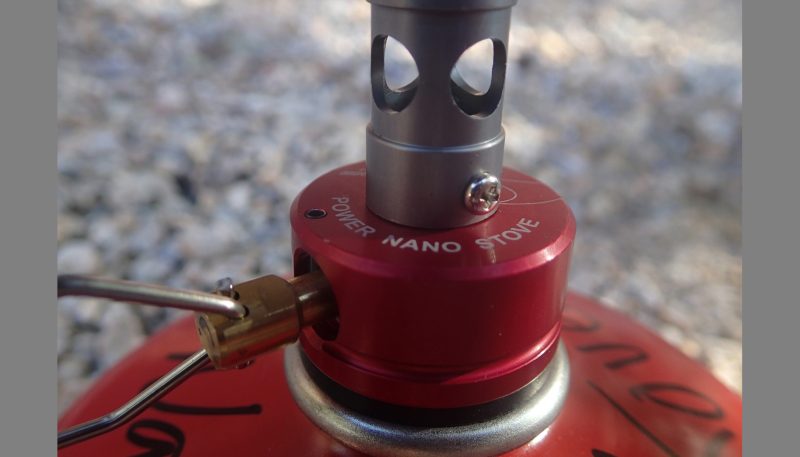
For the price, the Kovea Power Nano is excellent stove that will muscle shelf space from some better-known brands. It impressed me with its durability, wind performance and fast boil time. Only the Soto WindMaster, which has a regulator, performed better when the breeze became a factor.
Get to know Kovea. The Korean company is bringing its stoves to the United States this fall after years of being behind the scenes in the making stoves for at least one famous U.S. brand.
While the third heaviest among the four upright canister stoves tested, the Power Nano makes up for it in average boil time and performance in wind. Only the Soto WindMaster, which has a regulator, performed better when the breeze became a factor. And let’s be honest, weight in this category is a very relative term.
Boil Time
It was around 40ºF with a slight wind when the Power Nano averaged 2:28 to boil two cups of water. Soto’s WindMaster was equally as fast, while the Ion Micro averaged 3:13. MSR’s SuperFly was the slowest, averaging 4:38. Each stove was assigned its own 4-ounce canister of MSR’s IsoPro fuel for each aspect of this test.
Weight
With its case, the Kovea Power Nano will add 4 ounces to your pack. Naked, it’s only 3.3 ounces, making only the MSR SuperFly heavier in this test. The Olicamp Ion Micro wins the weight battle easily.
Efficiency
The Kovea Power Nano cooked 14 two-cup pots of water on 4 ounces of fuel, making it less efficient than the WindMaster at 15 and the OliCamp Ion Micro, which torched all comers by boiling 17 pots. The SuperFly struggled to only 11 pots boiled.
Wind Performance
A very solid performer in wind, the Power Nano averaged 2:28 to boil two cups in sturdy gusts of up 21 mph. Impressive. The WindMaster was superior in this category while the Ion Micro proved to be a suspect performer in similar conditions.
Durability
The Power Nano is well built, able to take the weight of a loaded pack. While it’s easy to store this in a hip pocket or more typically with your cookware, don’t be nervous about losing it deep in your pack. It’ll hold up.

No reviews have been posted for this product.